
Eguzon Yesterday and Today
The Éguzon region lies along the middle course of the Creuse River, part of the Loire basin, whose name refers to its deeply carved valley.
One million years ago, humans were already living in this valley, as shown by the “Pont de Lavaud” site — one of the oldest prehistoric sites in Europe.
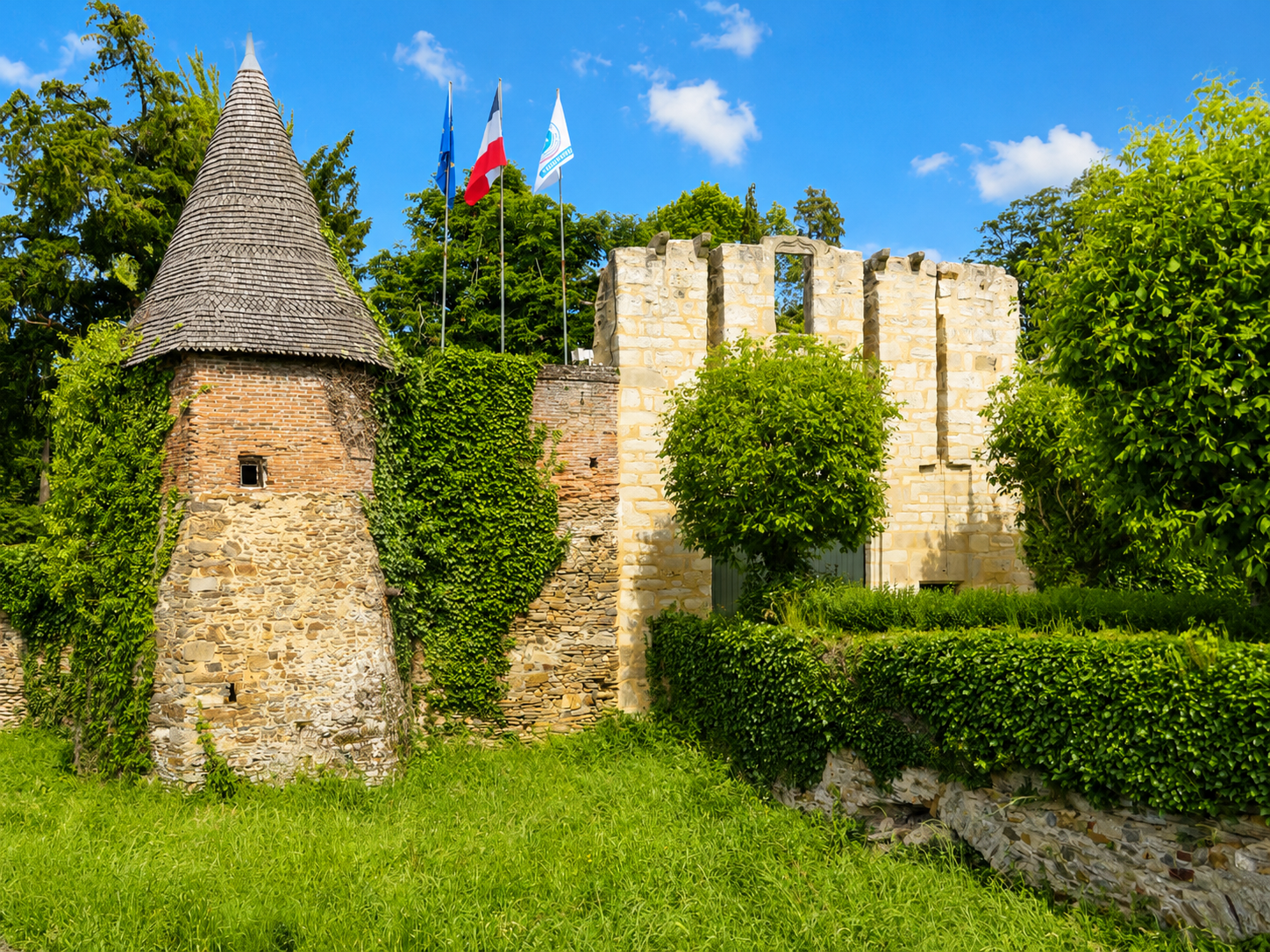
Around the 11th century, Éguzon was a small seigneury with a modest castle, of which only the entrance and the moat remain. The moat now surrounds the town hall. This seigneury belonged to the County of La Marche, a border zone between the lands of the King of France and those of his great rival, England, during the Hundred Years’ War.
In the 13th century, the region lived to the rhythm of the migrations of the “maçons de la Creuse”. These poor peasants left for Paris in winter to work on major construction sites, earning additional income to support their families.
Around 1850, with the arrival of the railway, Parisians began travelling down to the region. Writers such as George Sand, musicians like Frédéric Chopin, and painters including Claude Monet came to discover the wild landscapes of the Creuse.
The Éguzon area experienced a revival after 1900 with the arrival of “the fairy electricity”. In 1926, the largest hydroelectric dam in Europe at the time was inaugurated. Its production supplied electricity all the way to Paris.
The construction of the dam created the largest lake in the Centre–Val de Loire region. Today, this vast stretch of water is a lively hub for outdoor activities, offering sailing, kayaking, paddleboarding and more. Its shores attract visitors all year round, making it one of the region’s most popular tourist destinations.
The Valley of the Painters
Éguzon-Chantôme is fortunate to be located in the heart of the Valley of the Painters — a landscape that has inspired generations of artists. Drawn here by its wild scenery and unique light, painters flocked to the valley between 1830 and 1930, encouraged by influential figures such as George Sand.
From early plein-air painters discovering the art of painting directly from nature, to Impressionists and Post-Impressionists, each artist captured the valley’s fascinating beauty on canvas. Although the landscape has changed over time — shaped by the dam and enriched by denser vegetation — masterpieces by Claude Monet, Armand Guillaumin, Léon Detroy, and many others remain as witnesses of that artistic golden age.
The places that welcomed these artists still exist, and through the Valley of the Painters, numerous exhibitions celebrate their work — especially at the Musée de la Vallée de la Creuse. Acting as a bridge between past and present, the valley continues to welcome and support contemporary artists who come here to find new inspiration in our remarkable landscapes.